
High-Energy, High-Protein, Low-Carb, High-Fiber Breakfasts for Diabetes
Healthful Vitality | 2/16/2026 | High-Protein, Low-Carb, High-Fiber Breakfasts for Diabetes.
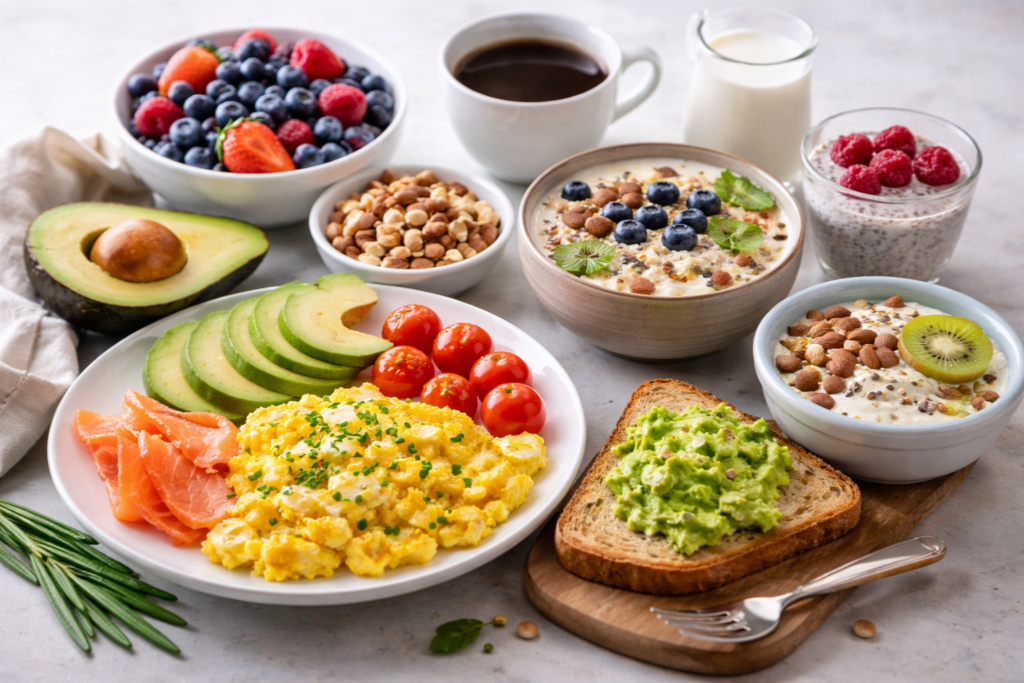
Breakfast composition has a powerful effect on blood sugar control throughout the day. Research consistently shows that larger, protein-rich, low-carbohydrate, high-fiber breakfasts can reduce glucose spikes, improve satiety, and support better overall metabolic outcomes in people with type 2 diabetes.
For type 2 diabetes, research supports breakfasts that are larger, higher in protein and healthy fats, lower in rapidly absorbed carbohydrates, and rich in fiber and low-GI foods. This pattern improves glucose spikes after breakfast, overall daily blood sugar patterns, satiety, and sometimes weight and medication needs.
Evidence Based Breakfast Patterns
1. Very‑low‑carb, high‑fat/high‑protein plate
Eggs, avocado, cheese, nuts; no juice/white bread. Cuts breakfast and 24‑h glucose excursions and variability vs guideline high‑carb breakfast (Chang et al., 2019; Oliveira et al., 2023).
2. Big protein‑ and fat‑rich breakfast (≈30–35% of daily calories)
Eggs, tuna or other lean protein, whole‑grain bread, yogurt, nuts. Gives larger HbA1c drop, lower BP, less hunger and more medication reduction than a small carb‑rich breakfast (Rabinovitz et al., 2014; Jakubowicz et al., 2021; Jakubowicz et al., 2015).
3. High‑protein whey breakfast
Whey‑based shake or yogurt + some low‑GI carb (e.g., oats, fruit, nuts). Reduces HbA1c, body weight, and postprandial glycemia vs high‑carb breakfast (Zhafira et al., 2023; Jakubowicz et al., 2017; Jakubowicz et al., 2021).
4. Low‑GI, high‑fiber cereal/bread
Oats or muesli with β‑glucan, whole‑grain bread, plus protein (eggs, yogurt, nuts). Lowers glucose and insulin AUC and improves cholesterol (Silva et al., 2015; Maki et al., 2016; Kabir et al., 2002).
5. Legume / millet‑based breakfast (where culturally appropriate)
Bean‑based dishes or ragi/pulse recipes provide low‑GI, high‑fiber, moderate‑carb options suitable for diabetes (Gitanjali & Singh, 2020; Bhambra et al., 2025).
Why This Breakfast Pattern Helps
The metabolic advantages of this breakfast pattern are not based on a single nutrient or food choice. Rather, they emerge from a combination of factors—meal timing, macronutrient balance, carbohydrate quality, and fiber content. The research below summarizes how each of these elements contributes to improved glycemic control, appetite regulation, and overall metabolic outcomes in people with type 2 diabetes.
| Feature | Metabolic benefit | Citations |
| High energy at breakfast, low at dinner | Lowers daytime glucose AUC, HbA1c, weight, and blood pressure vs high‑energy dinner (Rabinovitz et al., 2014; Jakubowicz et al., 2021; Jakubowicz et al., 2015) | (Rabinovitz et al., 2014; Jakubowicz et al., 2021; Jakubowicz et al., 2015) |
| Low carbohydrate / low GI | Strongly reduces breakfast and 24‑h postprandial hyperglycemia and glycemic variability (Chang et al., 2019; Oliveira et al., 2023; Bhatt & Lakshmi, 2022; Jakubowicz et al., 2015) | (Chang et al., 2019; Oliveira et al., 2023; Bhatt & Lakshmi, 2022; Jakubowicz et al., 2015) |
| High protein (esp. whey) & moderate fat | Lowers postprandial glucose, improves incretin/insulin response, satiety, weight and HbA1c (Rabinovitz et al., 2014; Zhafira et al., 2023; Jakubowicz et al., 2017; Jakubowicz et al., 2021; Jakubowicz et al., 2015; Park et al., 2015) | (Rabinovitz et al., 2014; Zhafira et al., 2023; Jakubowicz et al., 2017; Jakubowicz et al., 2021; Jakubowicz et al., 2015; Park et al., 2015) |
| High fiber / whole grains / legumes | Lowers glucose and insulin AUC and improves cholesterol vs high‑GI, low‑fiber meals (Silva et al., 2015; Gitanjali & Singh, 2020; Maki et al., 2016; Kabir et al., 2002; Tsihlias et al., 2000) | (Silva et al., 2015; Gitanjali & Singh, 2020; Maki et al., 2016; Kabir et al., 2002; Tsihlias et al., 2000) |
Figure 1: Key breakfast components linked to better glycemia in T2D.
Summary
For diabetes, breakfasts that are larger, earlier in the day, rich in protein and healthy fats, low in rapidly absorbed carbohydrates, and high in fiber and low-GI ingredients show clear benefits for blood sugar control, appetite regulation, and sometimes weight and HbA1c.
For a broader, research-based overview, see:
Smart Eating for Diabetes: What Research Reveals
https://healthfulvitality.com/smart-eating-for-diabetes-what-research-reveals/