
12 Key Principles of a Diabetes-Friendly Breakfast
Healthful Vitality | 2/20/2026 | 12 Key Principles of a Diabetes-Friendly Breakfast.
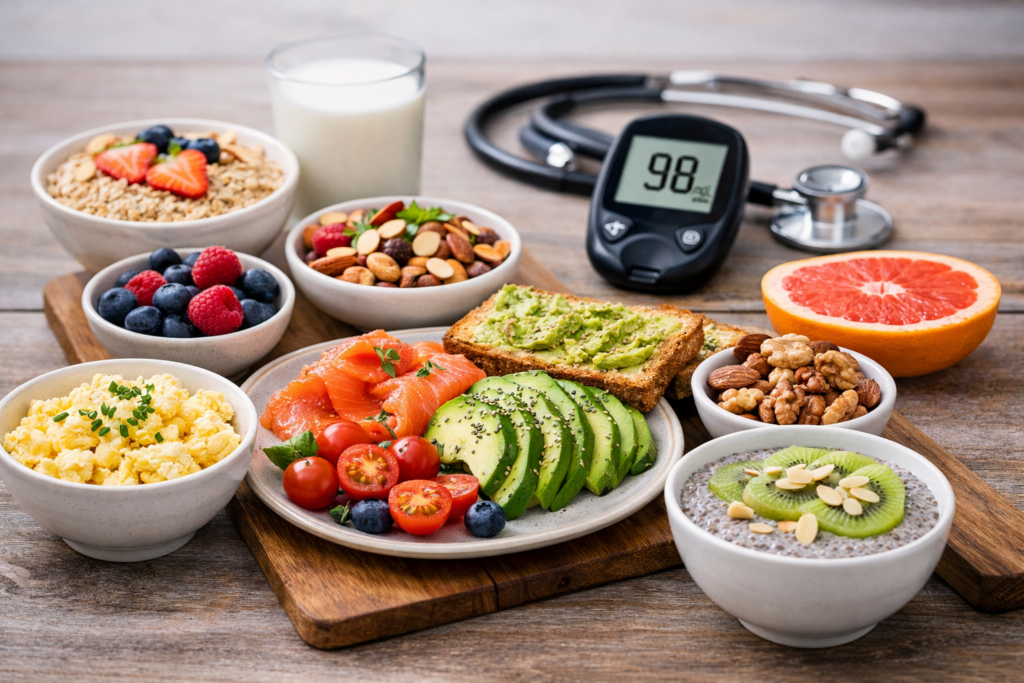
A diabetes‑friendly breakfast should avoid big morning glucose spikes, support satiety, and fit your medication plan. Research points to consistent patterns in timing, composition, and size of breakfast for people with type 2 diabetes.
The first meal of the day often sets the metabolic tone for the next 6–8 hours. Morning glucose spikes tend to be larger due to natural hormonal rhythms, making breakfast composition particularly important.
Research across clinical trials and nutritional studies reveals consistent patterns in timing, composition, and energy distribution that improve glycemic control.
This article synthesizes that evidence into 12 practical principles for building a breakfast that stabilizes glucose, improves satiety, and supports long-term metabolic health.
The Evidence-Based Principles
The following 12 principles are drawn from clinical research and nutritional studies on glycemic control in diabetes:
1. Don’t skip breakfast
Skipping breakfast worsens post‑meal glucose and hormone responses at later meals and is linked to poorer glycemic control and higher HbA1c in type 2 diabetes (Gómez-Ruiz et al., 2024; Jakubowicz et al., 2021; Jakubowicz et al., 2015).
2. Make breakfast substantial (“big breakfast”)
High‑energy breakfast with lower‑energy dinner reduces overall daily postprandial hyperglycemia and improves HbA1c and weight control vs the opposite pattern (Jakubowicz et al., 2021; Rabinovitz et al., 2014; Jakubowicz et al., 2015).
3. Emphasize protein
Protein‑rich breakfasts (e.g., whey, eggs) lower postprandial glucose, improve HbA1c and weight, and enhance satiety compared with carb‑heavy breakfasts (Bhambra et al., 2025; M*, 2024; Rabinovitz et al., 2014).
4. Lower the carbohydrate load
Very‑low‑carb breakfasts markedly reduce the large morning glucose spike and 24‑h glycemic variability (Chang et al., 2019; Oliveira et al., 2023; Oetsch et al., 2023).
5. Choose low‑GI, high‑fiber carbs
When carbs are included, low‑glycemic index, higher‑fiber choices yield lower glucose and insulin responses than high‑GI, low‑fiber options (Henry et al., 2020; Silva et al., 2015).
6. Prefer fat and protein over carbs at breakfast
Breakfasts richer in fat/protein vs carb‑rich breakfasts improve HbA1c, fasting glucose, blood pressure, and hunger in type 2 diabetes (Chang et al., 2019; Diabetes, 2023; Rabinovitz et al., 2014).
7. Use minimally processed plant foods
Guidelines recommend whole grains, legumes, nuts, seeds, vegetables, and whole fruit, while minimizing refined grains and added sugars (Diabetes, 2023).
8. Align with circadian rhythms
Eating earlier in the day and avoiding late, large dinners improves postprandial glycemia and insulin responses (Henry et al., 2020; Jakubowicz et al., 2021; Chacko, 2015; Jakubowicz et al., 2015).
9. Consider meal order and pairing
Combining fats/protein with carbs and eating vegetables/protein before starch can blunt glucose rises (Henry et al., 2020; Chacko, 2015; Chacko & Signore, 2020).
10. Limit late‑night eating
Avoiding food within ~3 hours of bedtime improves fasting glucose and variability (Gómez-Ruiz et al., 2024; Jakubowicz et al., 2021; Chacko & Schwartz, 2018).
11. Match insulin to high‑fat/protein breakfasts (type 1)
High‑fat, high‑protein breakfasts may require higher insulin dosing with pumps to control post‑meal excursions (Smith et al., 2021).
12. Individualize within overall healthy patterns
Multiple dietary patterns work; anchor breakfast in a generally plant‑forward, minimally processed diet tailored to medications and preferences (Diabetes, 2023; Chacko & Signore, 2020; Chacko & Schwartz, 2018).
Example breakfast patterns and effects
| Strategy | Main glycemic benefit | Citations |
| Low‑carb, high‑fat/protein breakfast | ↓ morning spike, ↓ 24‑h variability | (Chang et al., 2019; Oliveira et al., 2023; Oetsch et al., 2023) |
| Big, protein‑rich breakfast, small dinner | ↓ daily hyperglycemia, ↓ HbA1c, ↓ BP | (Jakubowicz et al., 2021; Rabinovitz et al., 2014; Jakubowicz et al., 2015) |
| Low‑GI, higher‑fiber carbs | ↓ glucose and insulin AUC | (Henry et al., 2020; Silva et al., 2015) |
Figure 1: Breakfast patterns that improve glycemic control in diabetes.
For a practical application of these principles, explore our structured model: Evergreen Breakfast for Diabetes and Beyond — a research-aligned breakfast framework designed for stable glucose and sustained metabolic support.
Conclusion
A diabetes‑friendly breakfast is generally early, substantial, protein‑rich, lower in carbohydrates (especially refined), and built from minimally processed plant foods, with most daily calories shifted to the morning and away from late‑evening eating.
When breakfast is structured to emphasize protein, minimize refined carbohydrates, and align with circadian rhythms, it can reduce glycemic variability, improve satiety, and support long-term glucose control.
Small changes in the first meal of the day can produce measurable improvements across the entire day.